

No.282

One thing that happened this week was rereading Nan Shepherd’s The Living Mountain, which I hadn’t opened in perhaps ten or so years, and which felt like a much needed albeit brief disappearing into the stuff of mountainsides and weather and the body in relation to the most elemental of elements. I live a large stone’s throw from the edge of the Cairngorm National Park, and as such its forms and powers are always scuttling around in the back of my mind. The afterword of my particular edition (Canongate, 2011) is written by Jeanette Winterson, someone who has things to say which I often encounter as straightforwardly flooring, and almost always relevant to some task at hand, or some exterior, societal matter. She wrote:
“Art, all art, is good at this essential relationship [the relationship between language and feeling] but literature finds us the words we need. And we need words. Not empty information. Not babble. Not data. We need a language capable of simple, beautiful expression yet containing complex thought that yields up our feelings instead of depriving us of them.”
I see this everywhere, this variety of deprivation—data depriving people of their feelings, prescribed technological futures depriving people of their feelings, overwork depriving people of their feelings. It hurts to see so many people unquestioningly, uncritically signing over their human souls to the babble and the data. Winterson mentions the soul in there:
“Art, and that includes writing, is not an end in itself; it is a medium for the soul […] you need not believe in the gods to believe in your own soul. It is that part of you which does not feel obliged to materiality. I do not know if the soul survives death—and I do not care—but I know that to lose your soul while you are still alive is worse than death. I want to protect my soul.”
For those still with intact souls there are things which we should be highly critical of, highly questioning of, highly wary of. Do any of the broligarchs1 know how to tend a young squash plant? No, no. They do not have that kind of time.

I keep encountering Hildegard of Bingen (1098-1179). I specifically mentioned her in Words to Love a Planet because she’s widely acknowledged in theological usage to have coined the term viriditas, itself a likely merging between the Latin words for ‘green’ and ‘truth’. It can be explained as something which Hildegard believed essential to cultivate both in and outside of the body, a sort of greening from within, the divineness of nature as an interconnected whole. Now, maybe, something we might refer to as photosynthesis, interconnectedness. When used metaphorically viriditas can also refer to vitality, vigor, verdure.
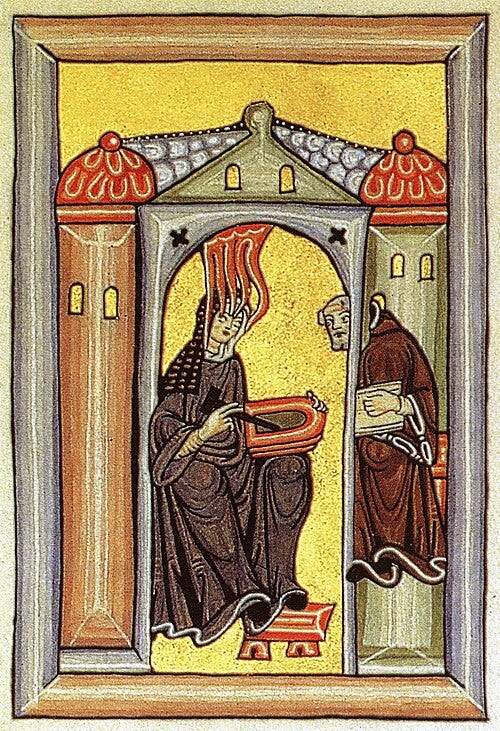
In Hildegard’s illustrated work Scivias, descriptions of the 26 religious visions she experienced, viriditas is something of a focus, and is translated variously. At one point in the manuscript she alludes to a kind of oneness, a hint at the green interdependence:
“You understand so little of what is around you because you do not use what is within you.”2
This is a fact which, like Hildegard, keeps cropping up. It cropped up3 in Winterson’s Nan Shepherd afterword too:
“For me, the imaginative world [books, reading] is the total world, not a world shredded and packed into compartments […] Imagination allows us to experience ourselves and our world as something that is relational and interdependent. Everything exists in relation to everything else […] so the effect of a book is to let us live nearer to total time than linear time allows.”
Winterson then goes on to say something which, though written fifteen years ago (and how is it possible fifteen whole years have happened since anything), seems painfully pertinent in the context of right now, particularly in the midst of a non-consensual implemention of AI:

“Linear time is exhausting. Life has never been more rushed. This present way of being is not a truth about life or a truth about time; it is propositional. We can disagree.”
This part about proposition, about the ability we all have to disagree, hits just in the soft spot between those two inward sloping curves of the ribcage. Carissa Veliz, a philosopher and associate professor of philosophy and ethics at the University of Oxford, said something also rib-hitting in a recent conversation with Myriam Francois:
“When a tech executive says ‘Oh, you’re going to be using AI tomorrow for this and that’ what they’re actually doing is telling you: Go out there and fulfill my vision of the world. Of course they are making a huge profit […] so they have a financial interest.
And when we unreflectively accept those assertions as if they were facts, when they’re not, what we’re actually doing is obeying in advance—in the sense of Timothy Snyder, the order might not be explicit, but it’s exactly what we’re doing. And so predictions are gramatically very similar to descriptions, but they’re actually prescriptions in the sense that they tell you what to do. And if you accept them as facts without being critical, what you’re doing is obeying.”

Back to the cropping up of Hildegard. I read something4 this morning about the plant borage (Borage officinalis, known commonly as starflower), which informs me that since the most ancient of times borage, when eaten, was believed to produce joy and dispel melancholy. Then, Hildegard again: she who planted it in her own garden, and who thought that rubbing the plant’s juice on different coloured silks before applying those to the body would be medicinally useful: red silk to the eyes for vision and green or white silk to the head for ringing in the ears.
It was additionally interesting to me that both vision and ear-ringing were mentioned, because various authors have suggested that the descriptions of the visions by Hildegard, the illustrations in Scivias too, such as bright lights and auras, might have been caused by the usually migraine-accompanying scintillating scotoma, itself a kind of visual aura. In his book Migraine (which in the fun spirit of denial I have still not read in full despite having migraines at least three times per month), Oliver Sacks called Hildegard’s visions ‘indisputably migrainous’. I too am indisputably migrainous, and should read the damn book.
What I will do instead, though, is go immediately out into the garden to see if there is borage growing anywhere, as there was definitely some last year, and it is likely to have self-seeded. If there is any: I will gobble its blue flowers to dispel any melancholy and pat pat pat its hairy leaves, and wonder if Hildegard of Bingen had medieval migraines.



WORK-RELATED NEWS:
Firstly: Earlier this month Lithub published one of the essays from Words to Love a Planet (from the chapter ‘Weather’) and along with it a handful of the terms and their illustrations. You can read it here.
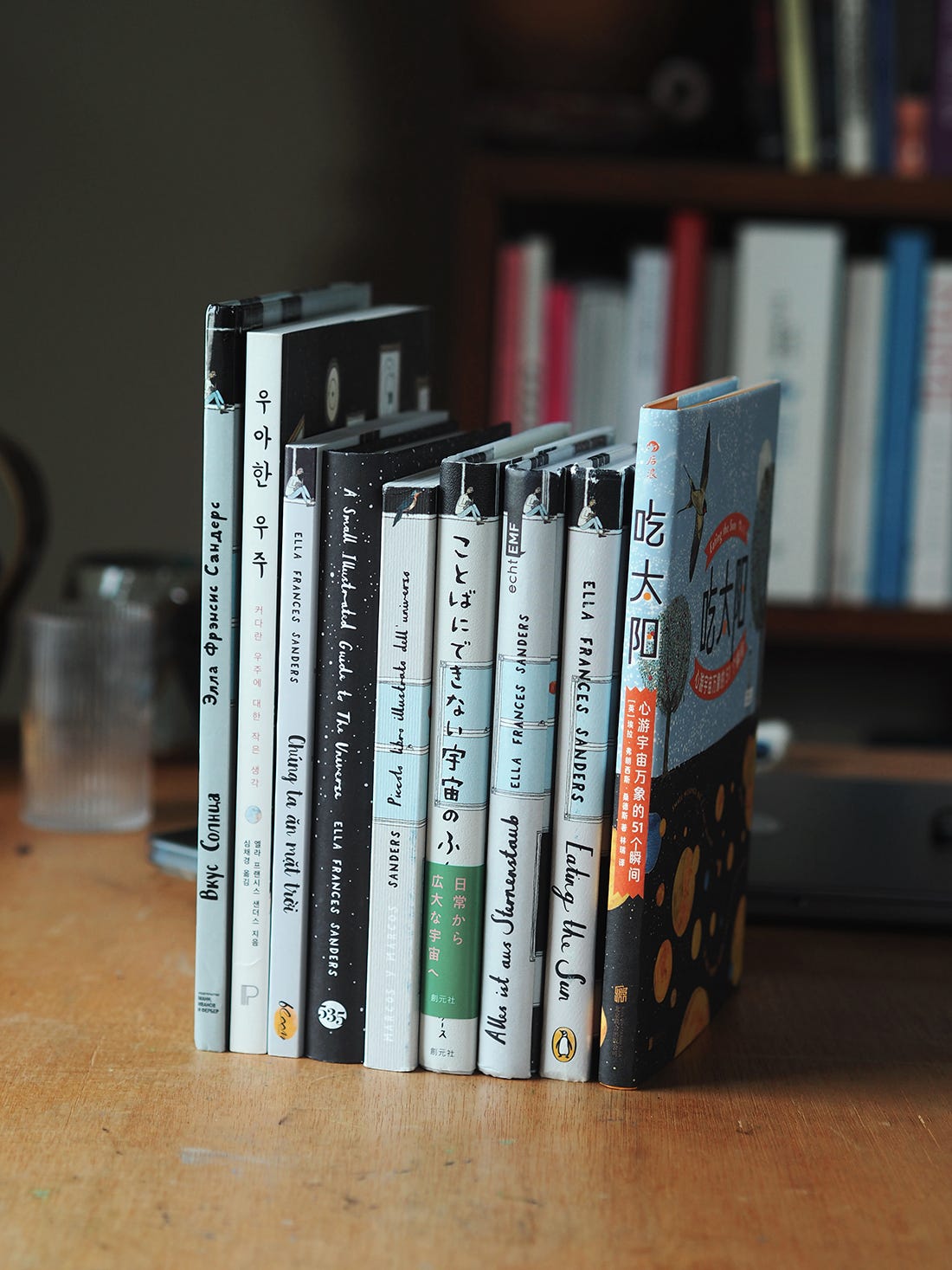
Also: I received a bundle of books.
The Chinese edition of Eating the Sun (my third book) found me on Thursday afternoon, waiting on my desk, and it was a funny thing to turn through pages which were illustrated and written perhaps seven years ago now. Still, delight. Still, a pleased feeling. And interesting to note how the illustrations look on a more papery paper, a thinner paper, uncoated, more the paper you would expect from a fiction title—I lack the precise paper terms—because for the most part, actually perhaps without fail, all the editions of my books have been printed on thicker paper, often more white to supposedly provide the colours with what they need. In this edition though the colours of everything, while maybe a little more muted, were lovely.
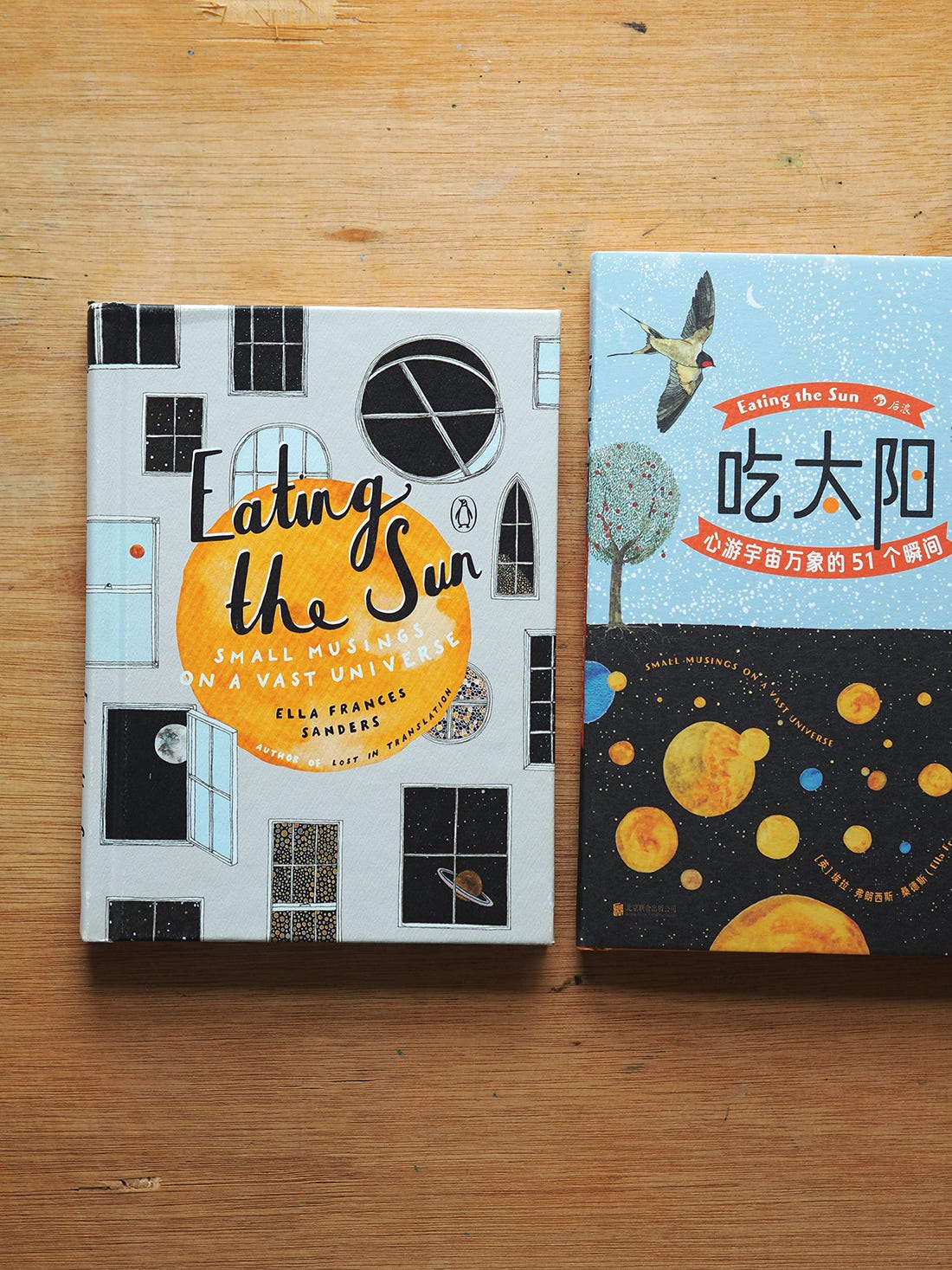
For anyone not aware Eating the Sun is an illustrated exploration of the principles, laws, and wonders that rule our universe, our world, and our daily lives, and was given a starred review by Publisher’s Weekly (glee!) who said it was “poetic yet scientifically illuminating”. It was also awarded the 2019 Whirling Prize, and Maria Popova of The Marginalian (formerly Brainpickings) called it “[A] lyrical and luminous celebration of science and our consanguinity with the universe. . . . Playful and poignant.” which was high praise indeed, coming from such an iconic voice in the space of spacetime and our place within it.
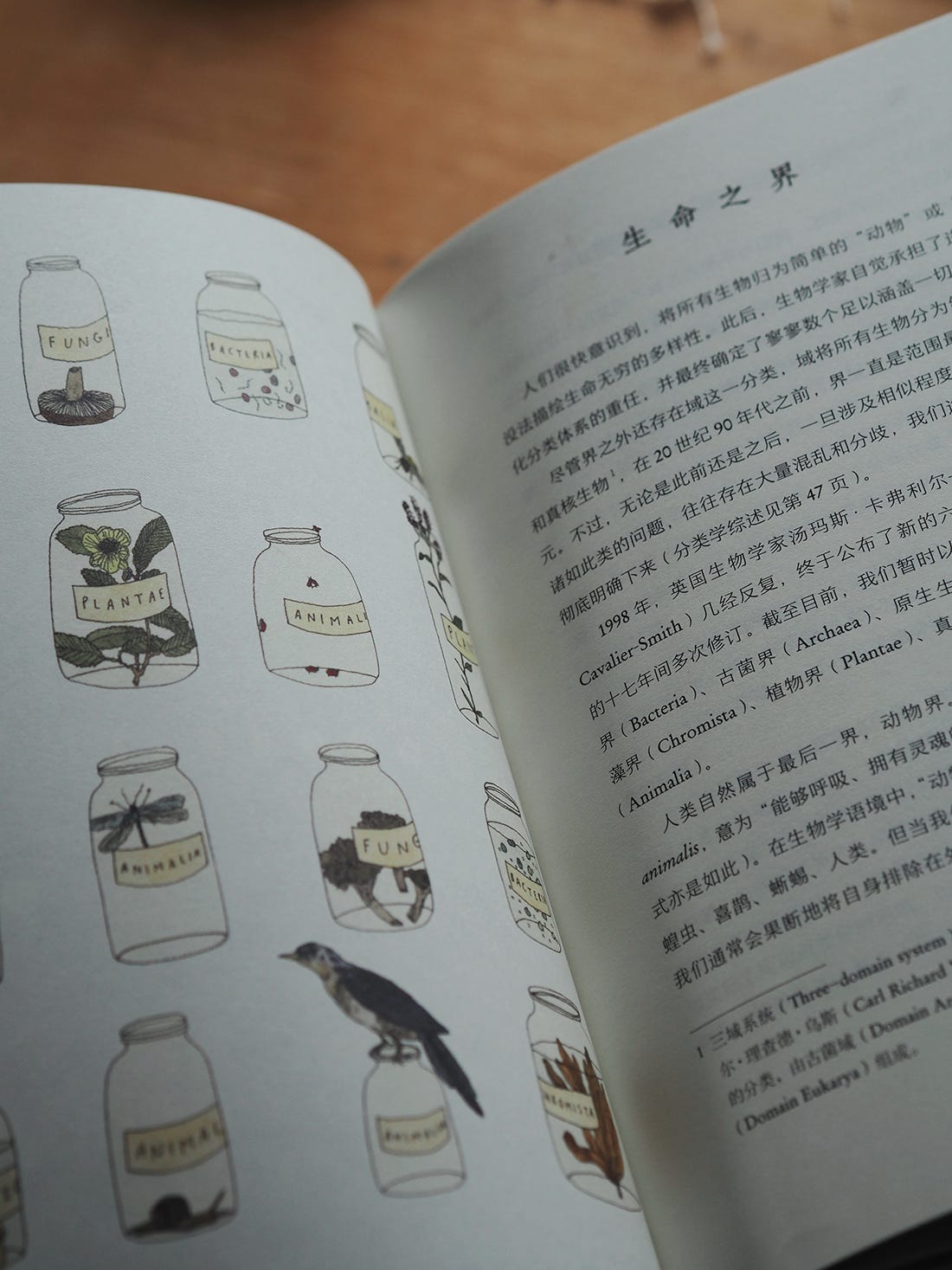
It feels in some ways odd to give this space to a book that isn’t the newest book, but I also think it’s incredibly important to recognise that an older book is by no means—necessarily, depending—an irrelevant book, and actually in a lot of ways I think Eating the Sun is perhaps one of the most rewarding book formats I’ve been able to entertain so far—the short essays are something which has returned in Words to Love a Planet, though the latter ones were able to be slightly longer and a good use of my writing legs, a utilisation that is also able to happen every few months with my Orion column too, for which I’m very thankful.
What a lot of time, what a lot of space, what a thing it is to have your thoughts printed on paper at all. From this particular book-shaped piece of spacetime:
“A sense of wonder can find you in many forms, sometimes loudly, sometimes as a whispering, sometimes even hiding inside other feelings—being in love, or unbalanced, or blue.
For me, it is looking at the night for so long that my eyes ache and I’m stuck seeing stars for hours afterwards, watching the way the ocean sways itself to sleep, or as the sky washes itself in colors for which I know I will never have the words—a world made from layers of rock and fossil and glittered imaginings that keeps tripping me up, demanding I pay attention to one leaf at a time, ensuring I can never pick up quite where I left off.
[…]
Depending on where you look, what you touch, you are changing all the time. The carbon inside you, accounting for about 18 percent of your being, could have existed in any number of creatures or natural disasters before finding you. That particular atom residing somewhere above your left eyebrow? It could well have been a smooth, riverbed pebble before deciding to call you home.
You see, you are not so soft after all; you are rock and wave and the peeling bark of trees, you are ladybirds and the smell of a garden after the rain. When you put your best foot forward, you are taking the north side of a mountain with you.
[…]
Without atoms, nothing would be here; not the book in your hands, not the pen that leaked into your pocket this morning, not those buildings that are enough to make you scared of heights, nothing. If it weren’t for atoms, there wouldn’t be mass, or molecules, or matter, or me, or you.”

THIS WEEK I FELL IN LOVE WITH:
Newer paintings by Neil Ernest Tomkins, who was also fallen in love with around the time of newsletter No.264.
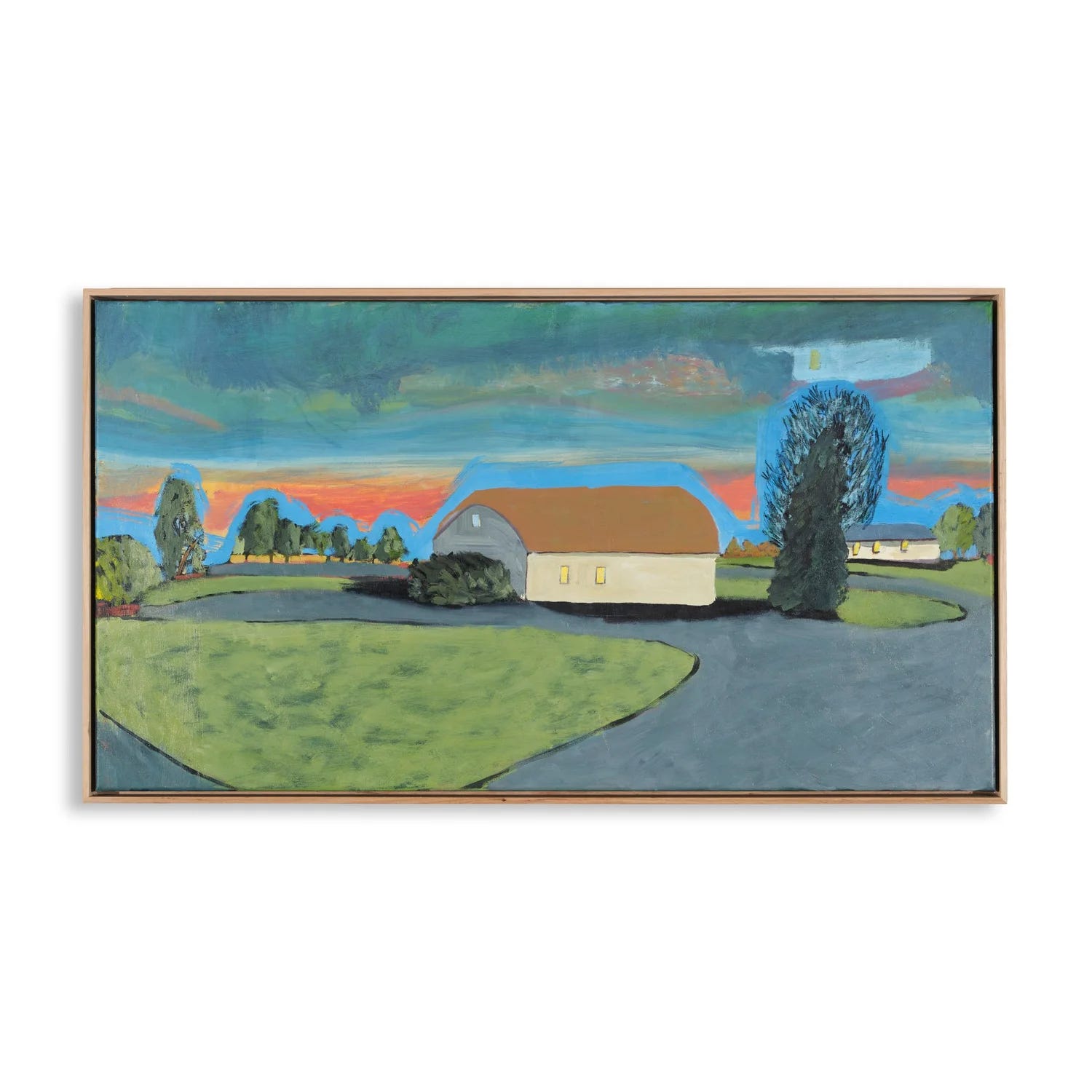
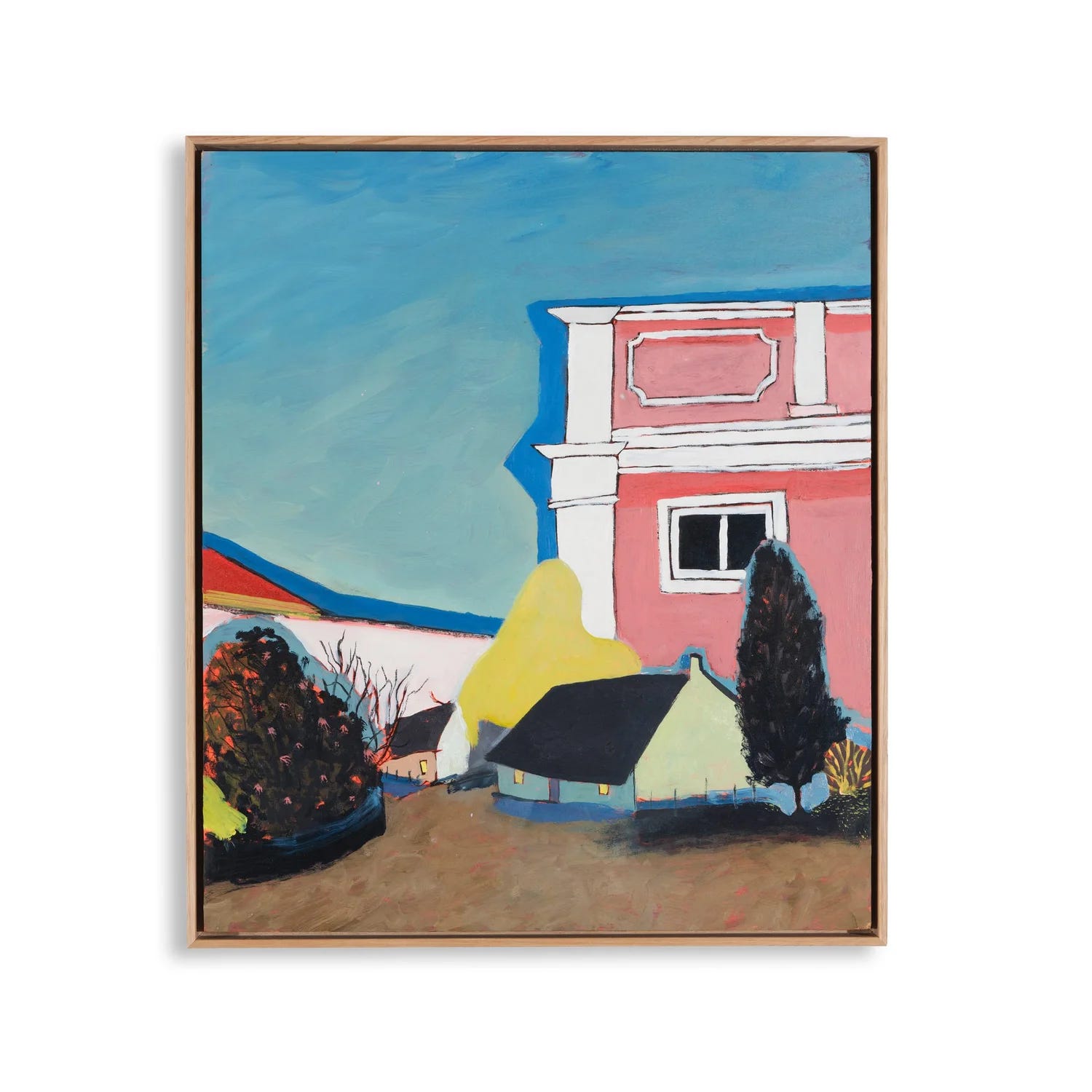
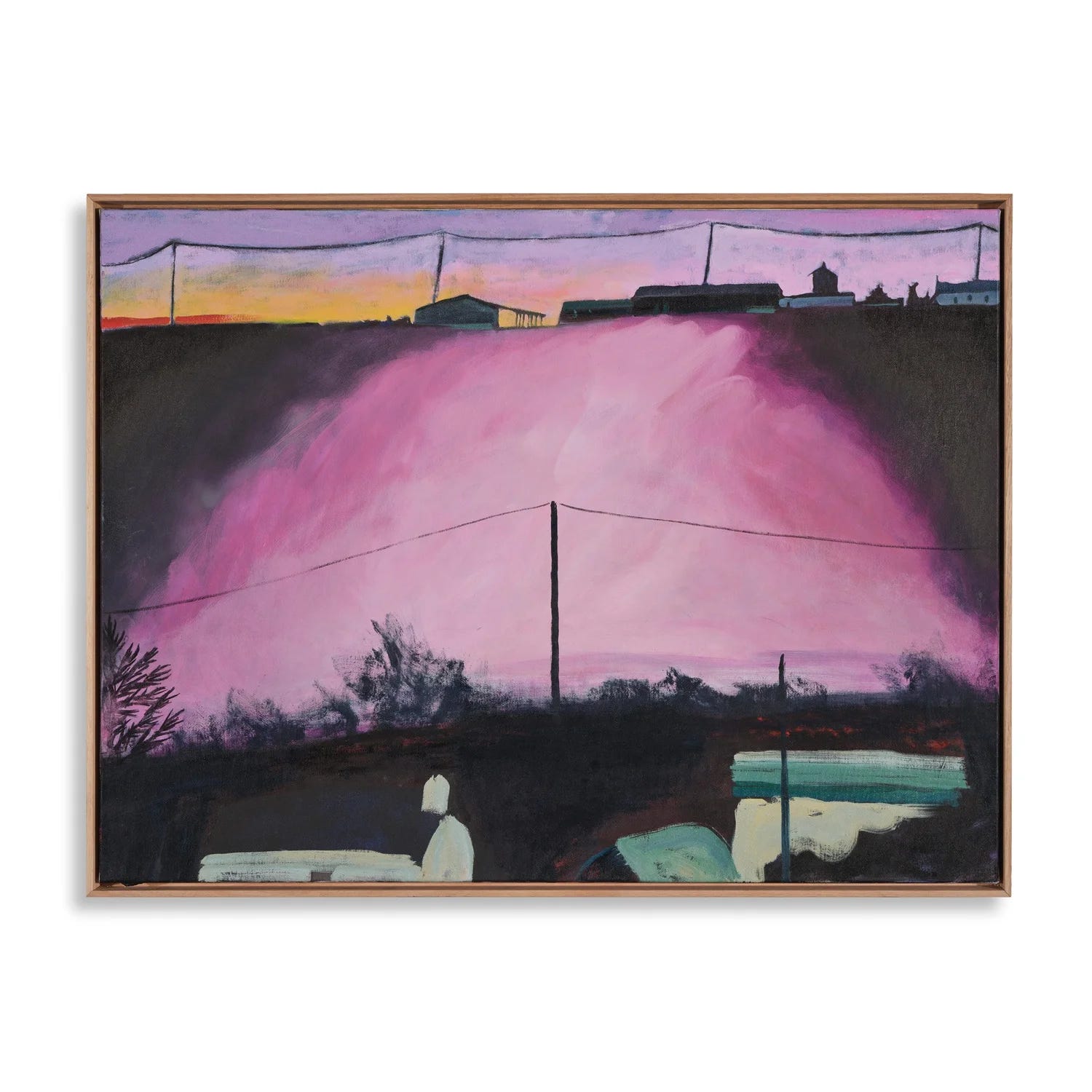
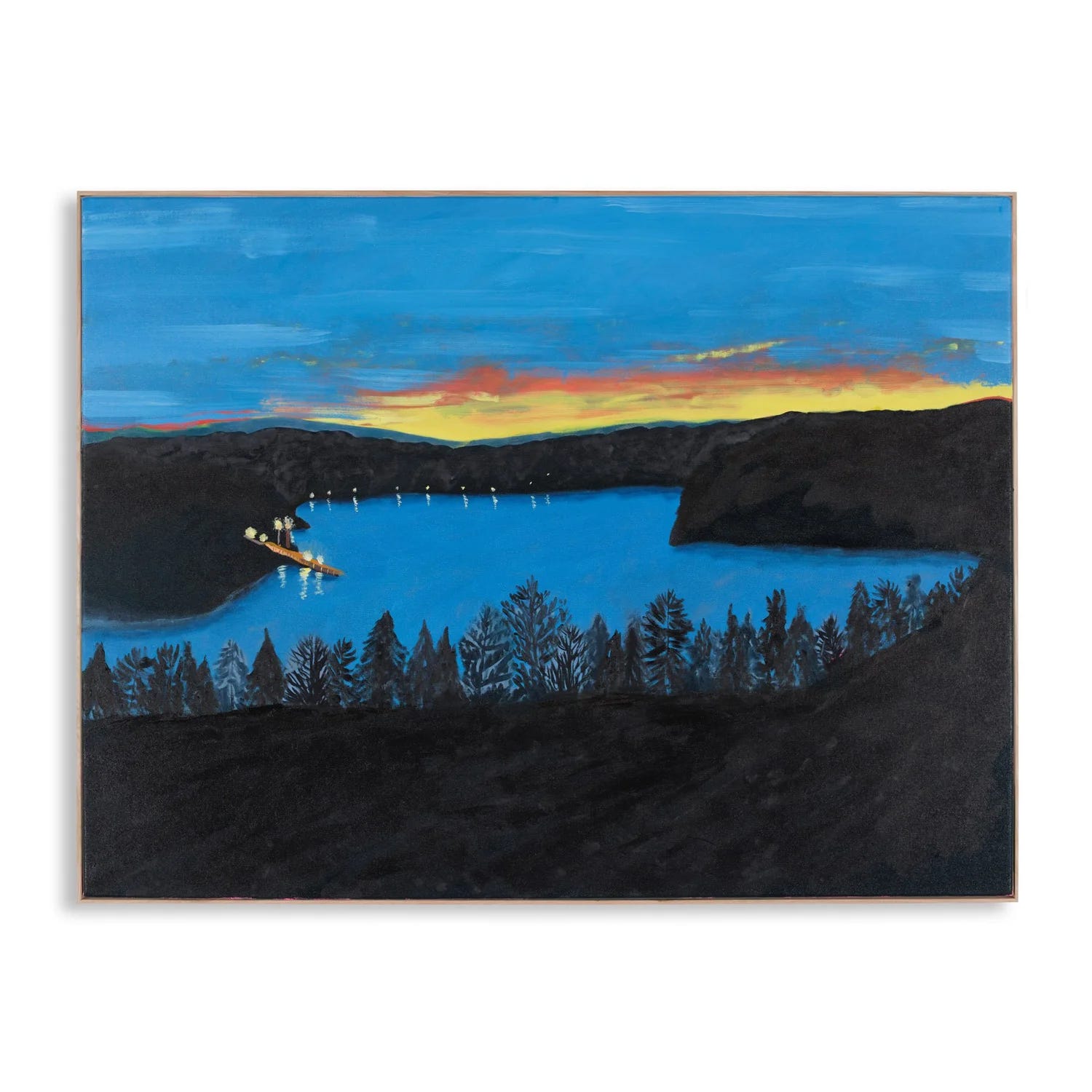
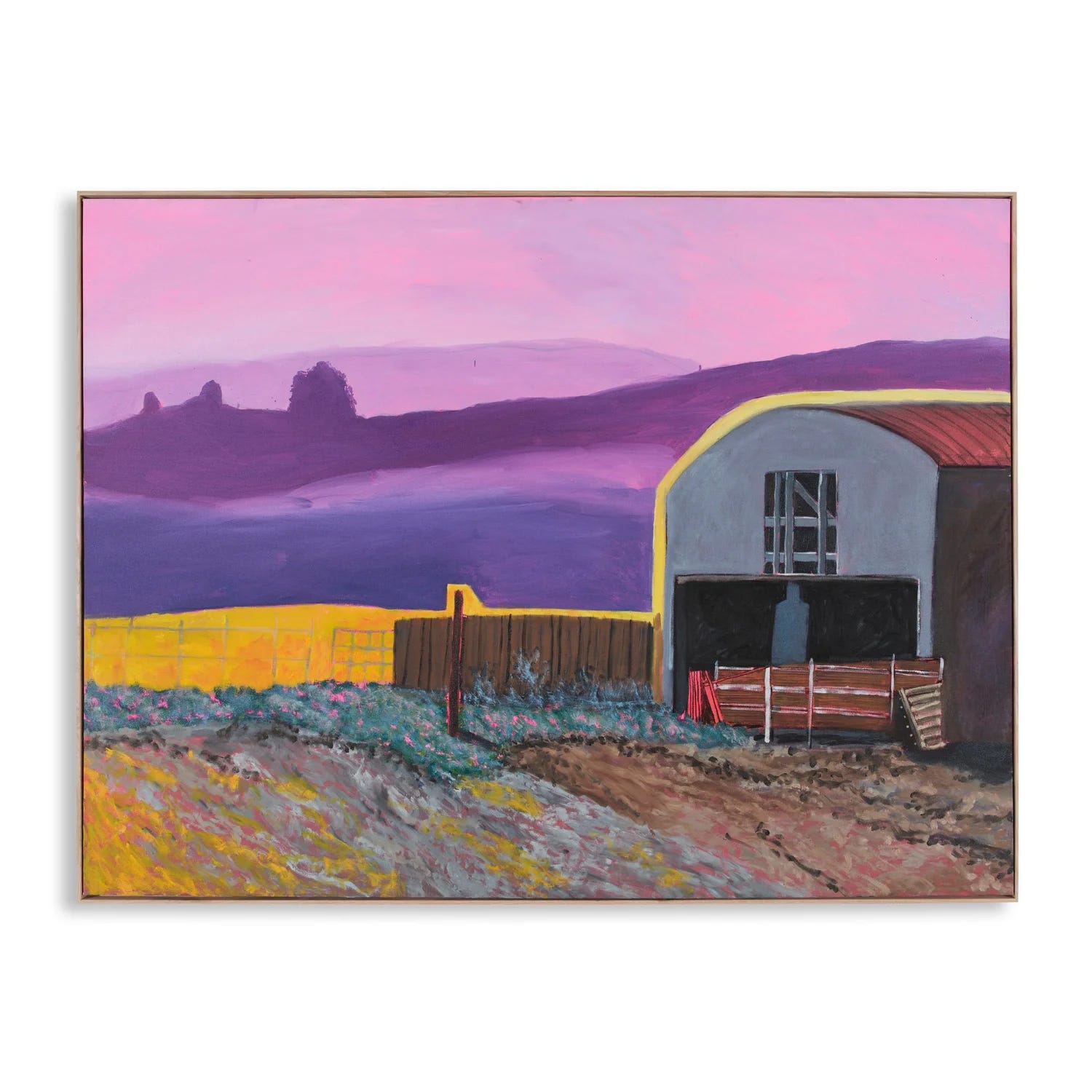
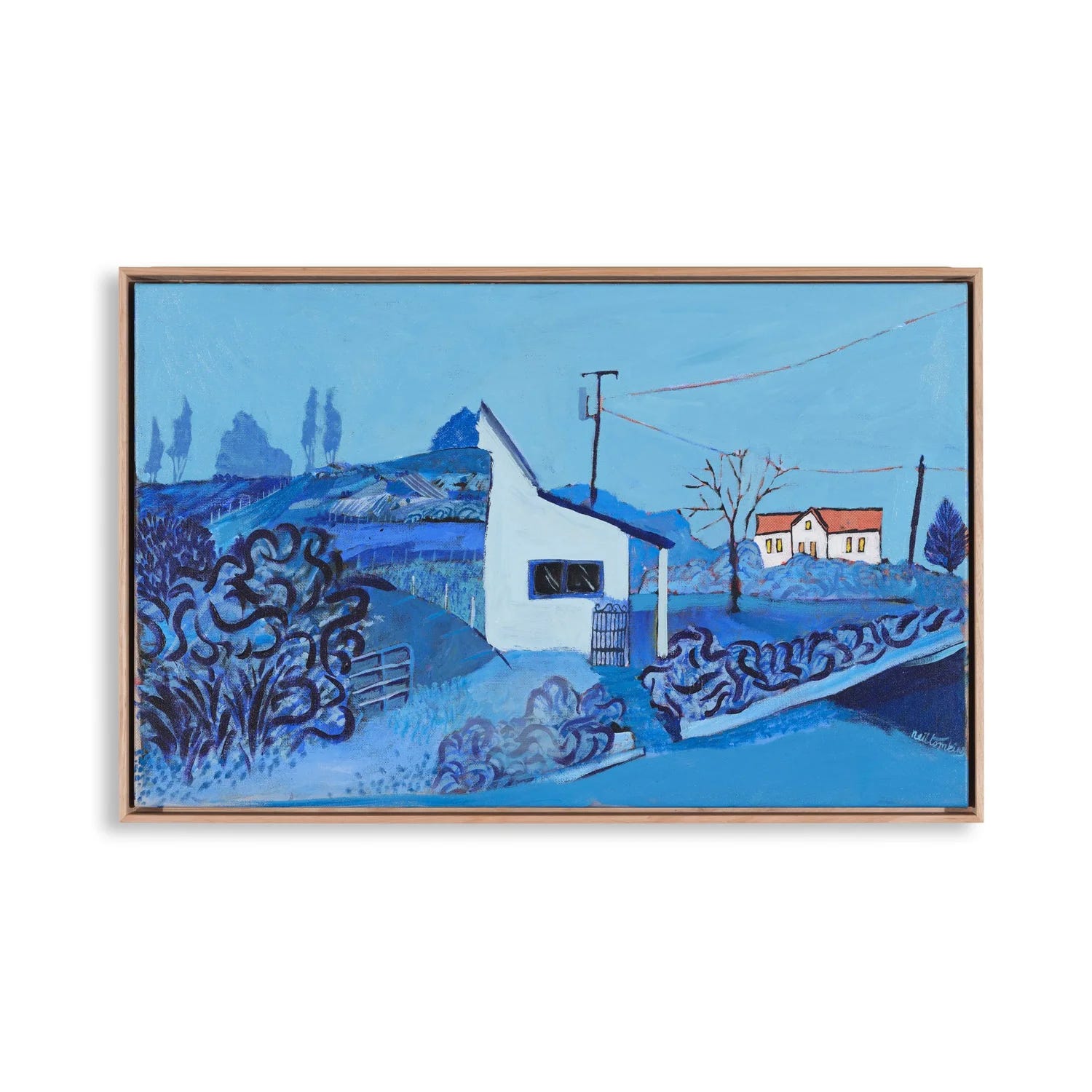
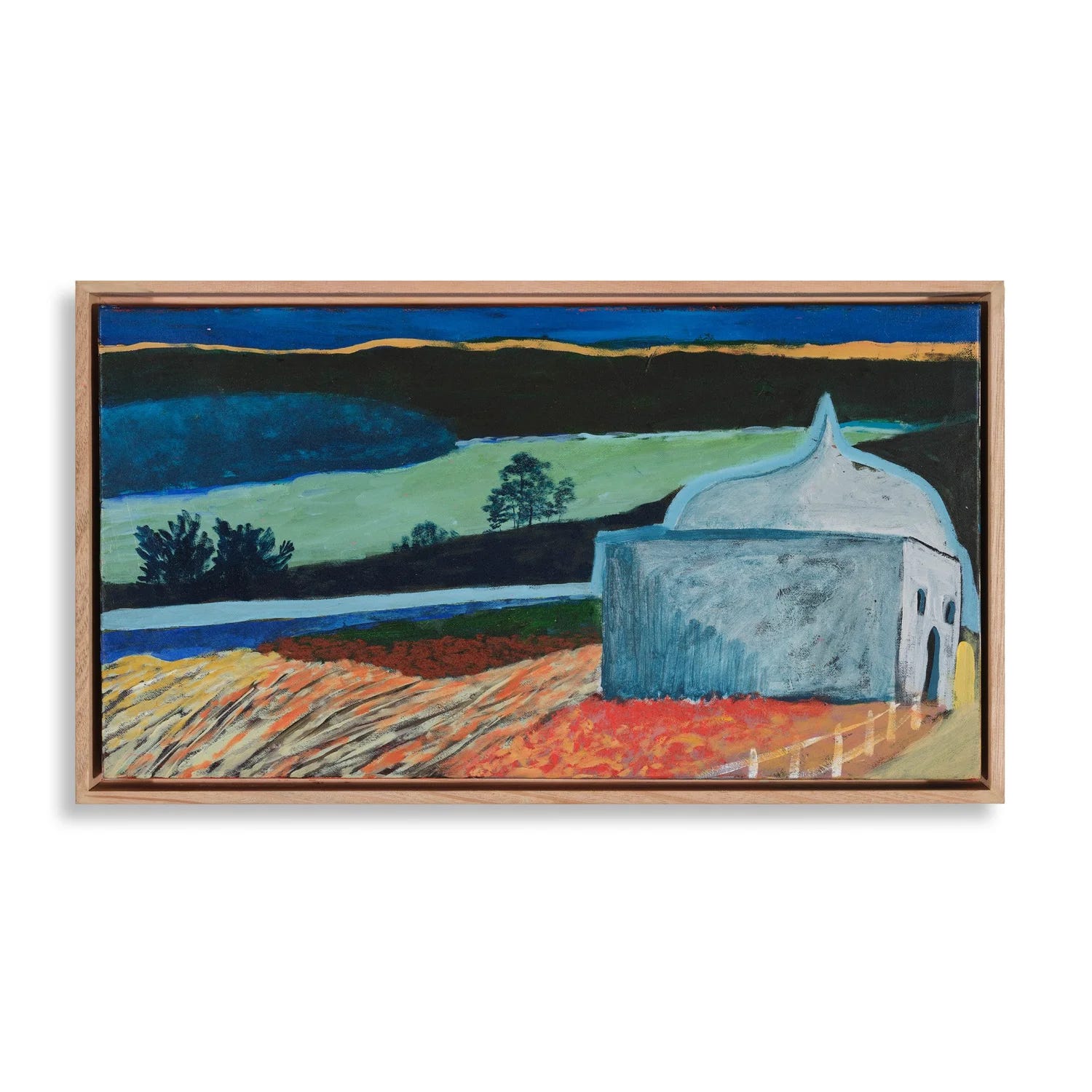
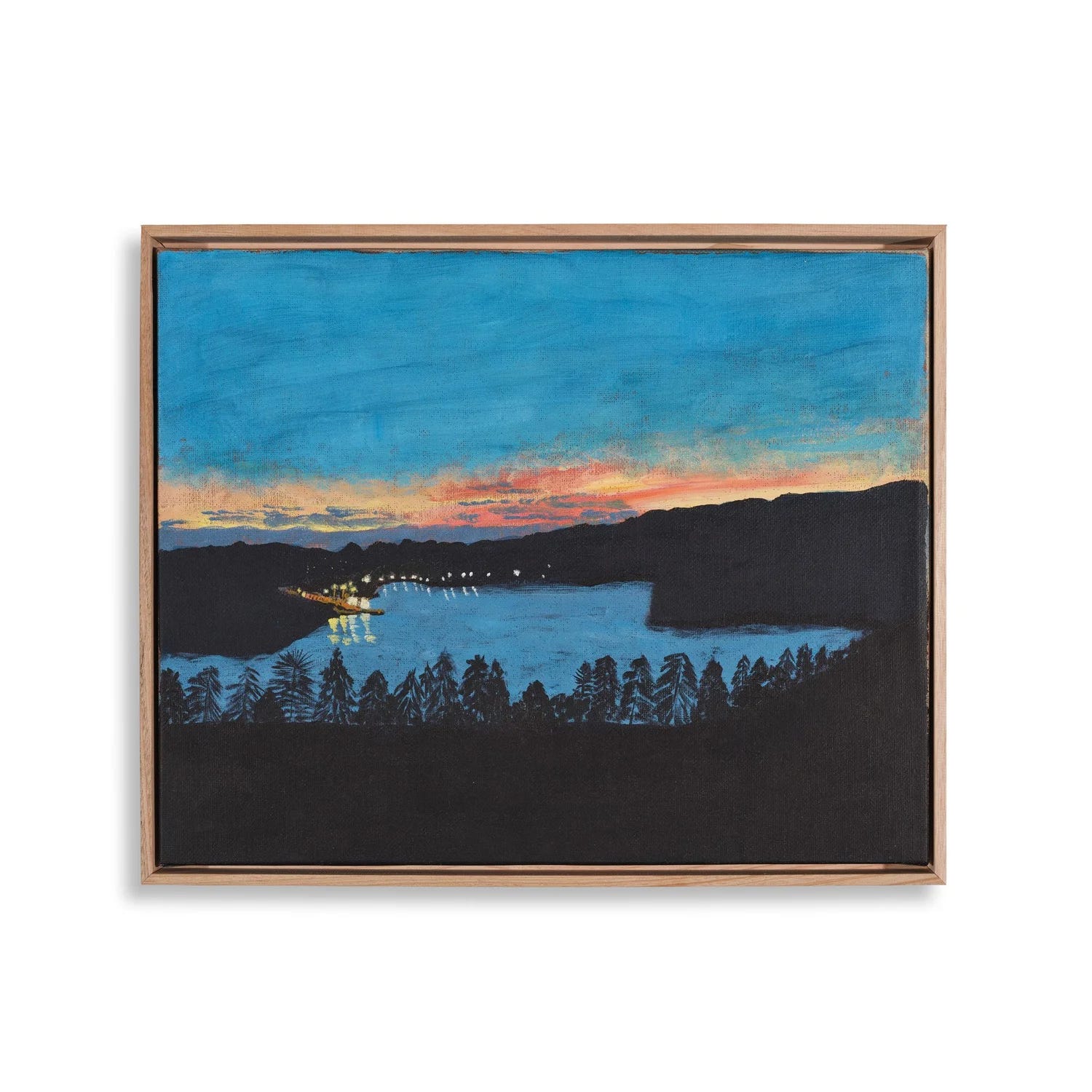
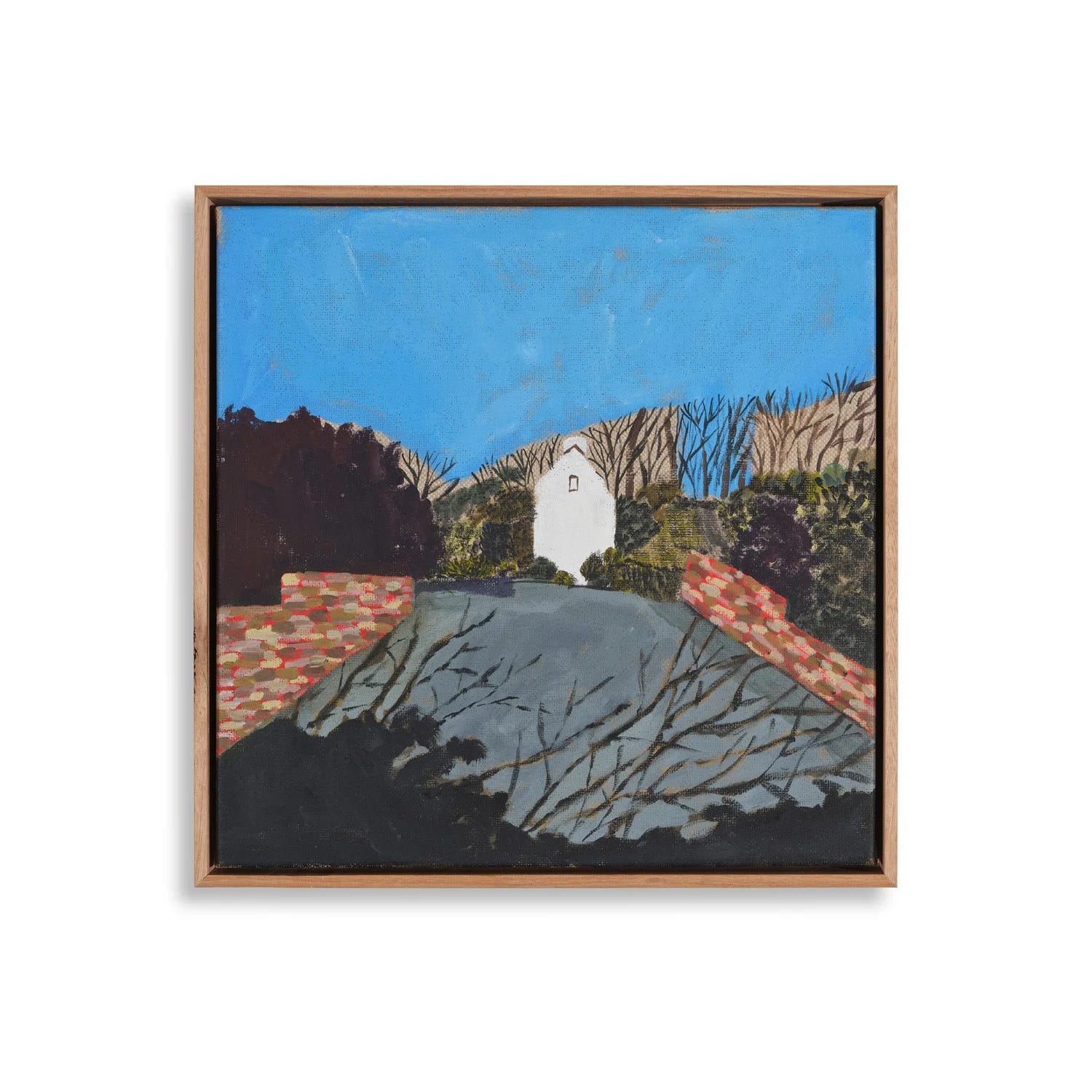
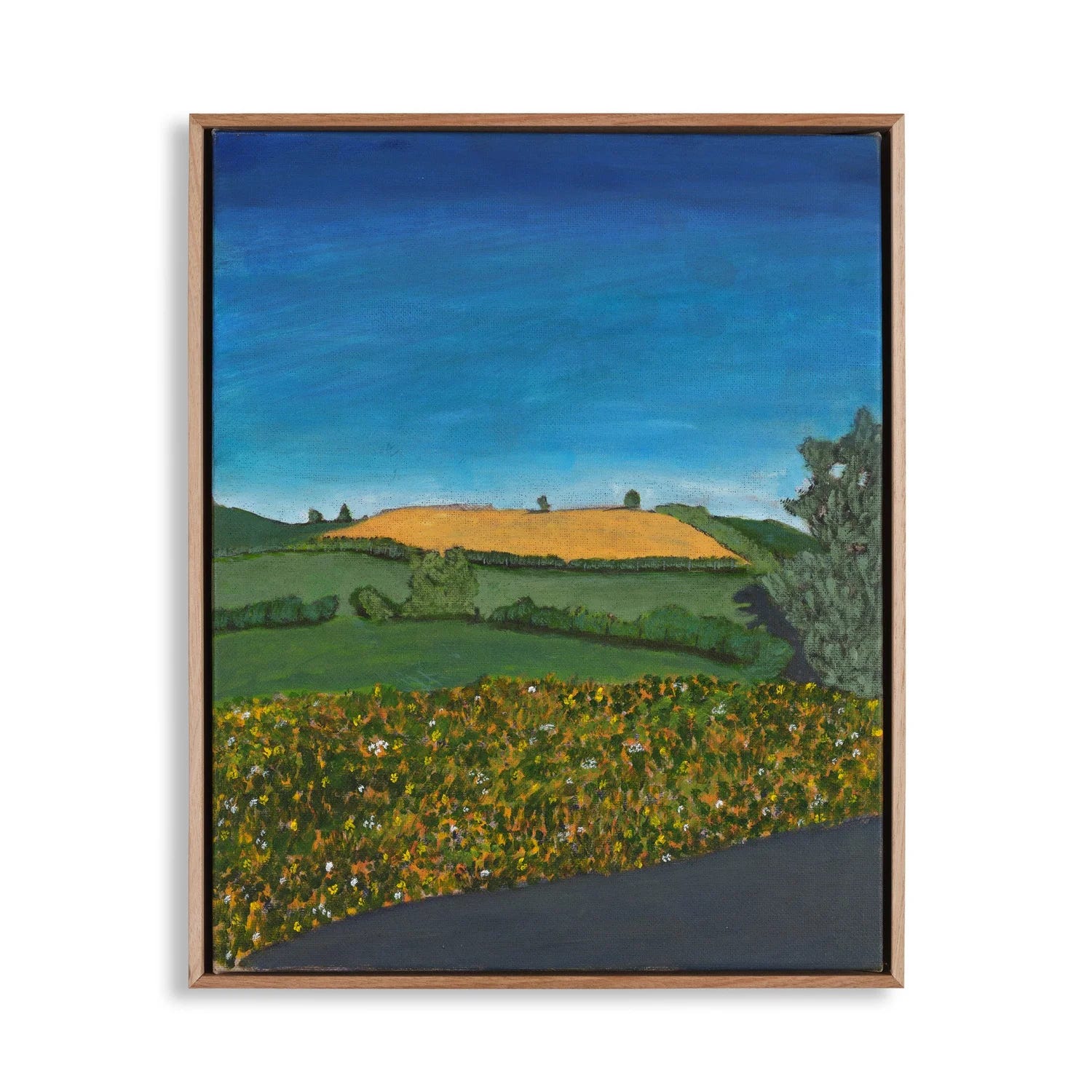
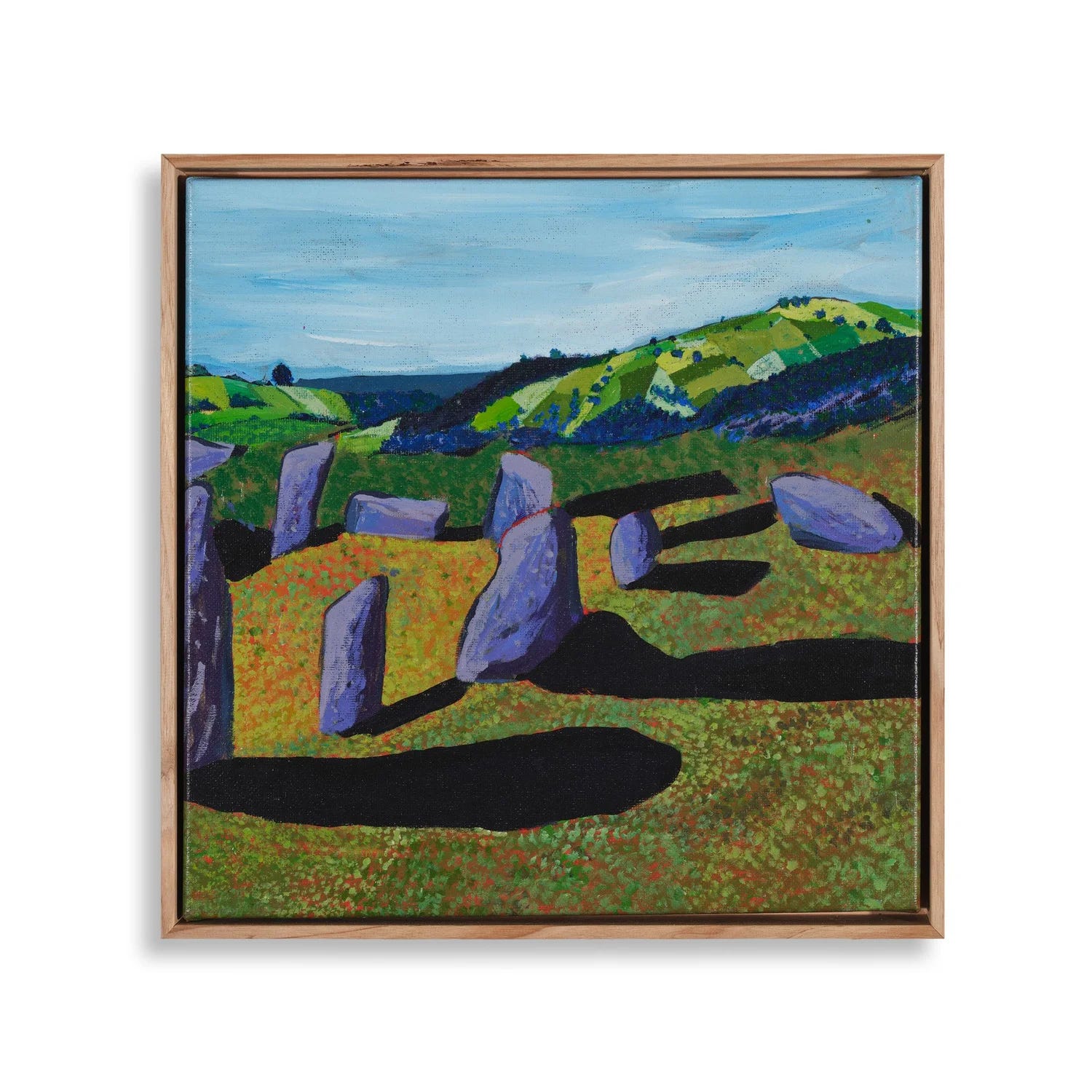
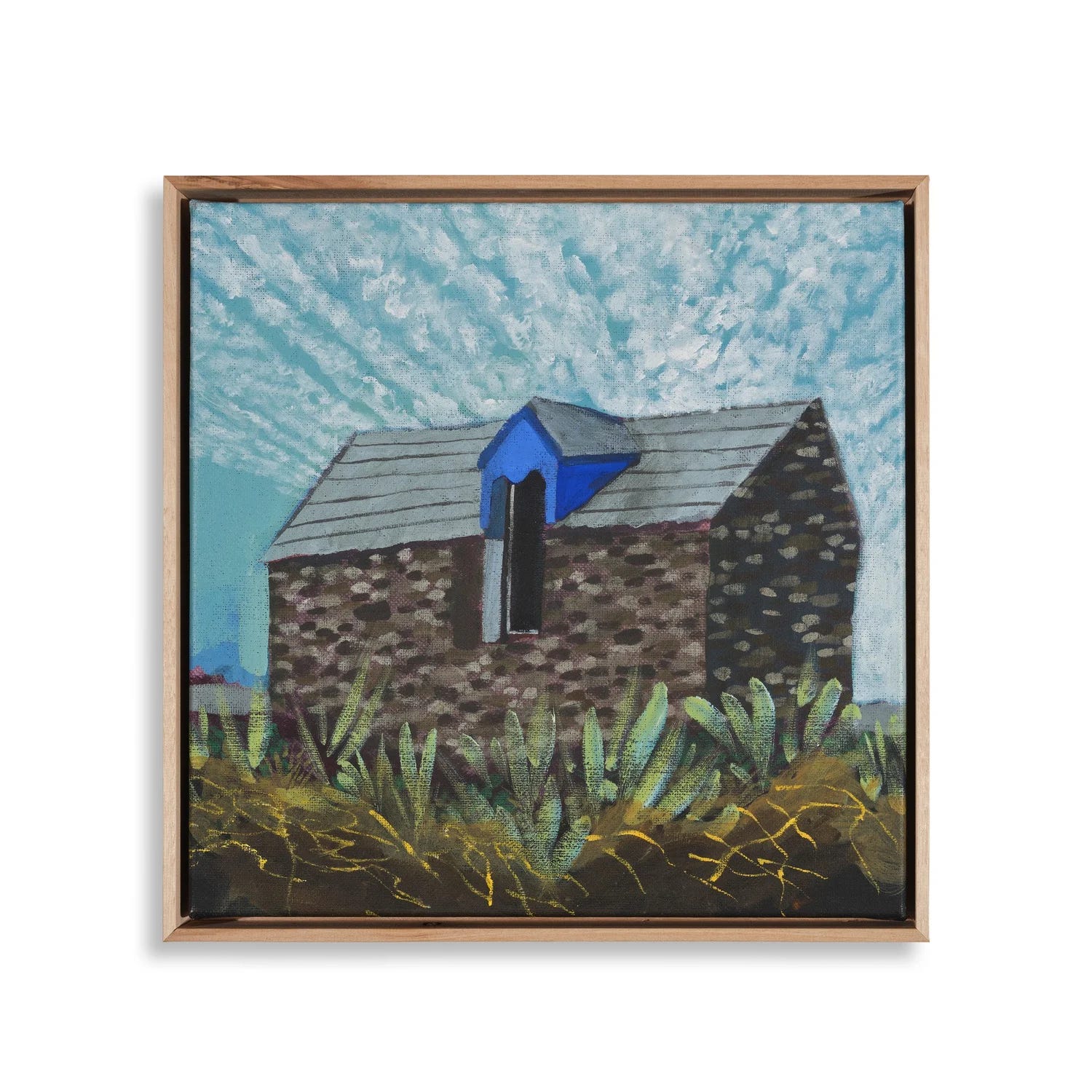
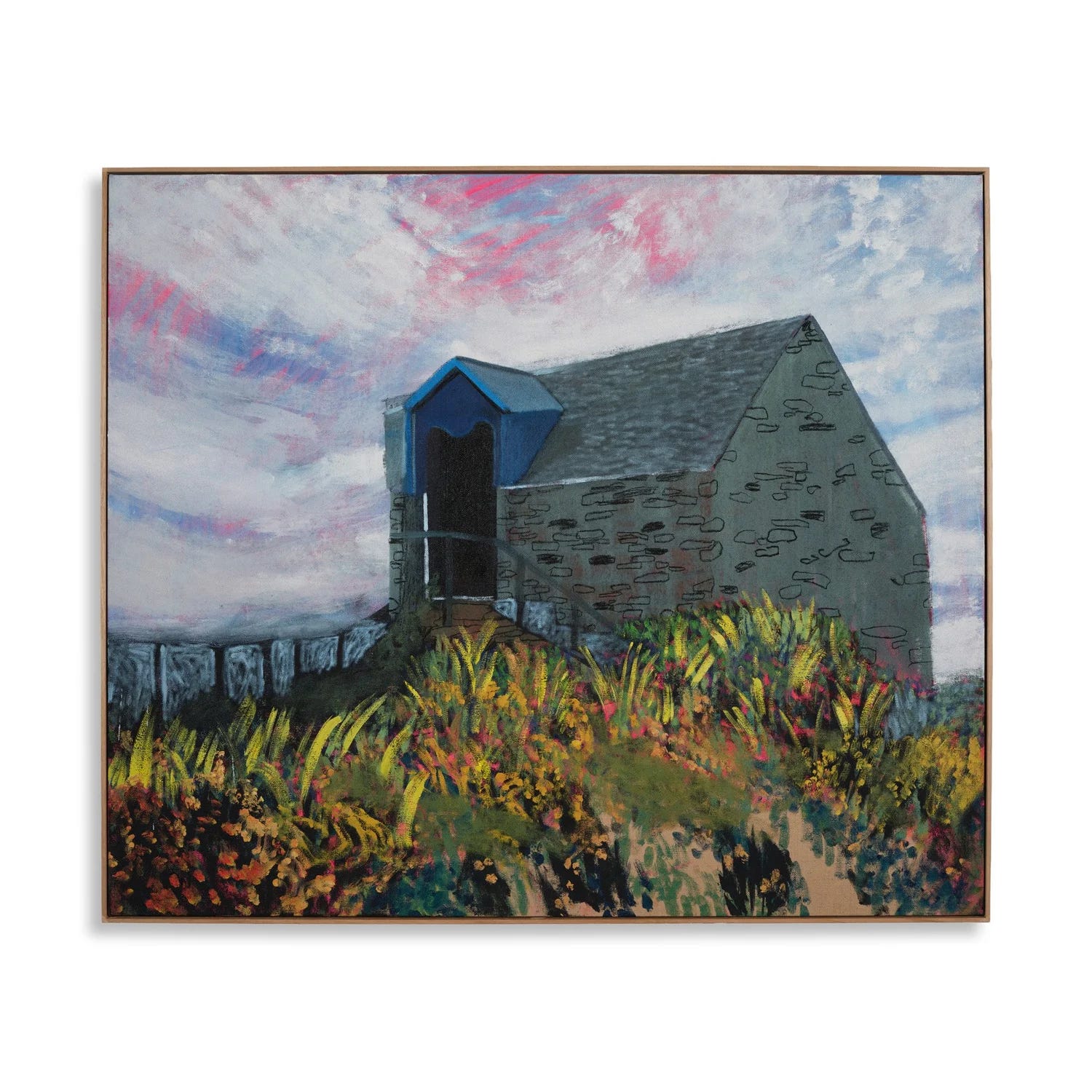
This newsletter feels a thousand years long, and perhaps it is, but I’m finding the pedulum of creative thought and/or ability is far more unpredictable these days—often like drawing water from a determined stone, sometimes like despair from nowhere, sometimes like mania, sometimes like a hundred clear images at once demanding to be painted onto paper. Let us end with this quote about endings:
“So, then, if you can’t ever end things neatly, can’t ever put them back quite the way you found them, surely the alternative is to remain stubbornly carbonated with possibility, to never rest from your rotation. To keep assembling stories between us, stories about how everything was everything, about how much we loved.”
— Ella Frances Sanders, Eating the Sun
AGAIN AND FOR HOWEVER LONG NECESSARY: Reading list for a Free Palestine. / The Environmental Devastation of Genocide / Ten free ebooks for getting free from Haymarket Books. / Support verified Sudanese support campaigns. / Email templates and support options for a Free Palestine.
Glad for the brilliance that is Rebecca Solnit’s newsletter, Meditations in an Emergency, for introducing me to this useful term. The context in which I read it:
“The Internet is itself largely a creation of men in Silicon Valley; they have made their products most of all for people like themselves, and it turns out that their products are toxic. Yeah, those men who sat on the platform with Trump on inauguration day and their fellow broligarchs.”
Hildegard of Bingen, Scivias, 1.2.29. Translation from Avis Clendenen, “Hildegard: ‘Trumpet ofGod’ and ‘Living Light,’” Chicago Theological Seminary Register 89, no. 2 (1999): 25.55
I love this phrase. To ‘crop up’ literally meant for a plant to emerge from the ground, and also meant rocks emerging, coal. An emergence.
Within the first periodical from the Anarchist Gardeners Club, ‘A Common Treasury’
Your latest newsletter appears to be little more longer than usual I must say
As per usual Ella, this newsletter arrived as a little bit of sparkly, shimmering joy in an otherwise dull and monotonous inbox. Strangely I have that exact same edition of The Living Mountain and, while I do love and agree with the quotes you've shared, Winterson's other statement's in that afterward about ADHD being caused by a lack of reading left such a deeply sour taste that I've felt betrayed by her ever since (being an adult with ADHD whose childhood was almost entirely taken up with reading and being outside). I don't disagree with most of the things she says and I've loved plenty of her books, but I don't know if I'll ever forgive her for that (I think rather thoughtless) dismissal.